The Death of "Just DCA": How to Outperform Blind Bitcoin Accumulation by 5.71x
Discover why blind Bitcoin DCA is leaking your alpha. Learn how SmashFi’s Volatility Sniper and MVRV Quantile Model mathematically outperform static accumulation by 5.71x. Stop guessing, start intelligent stacking.
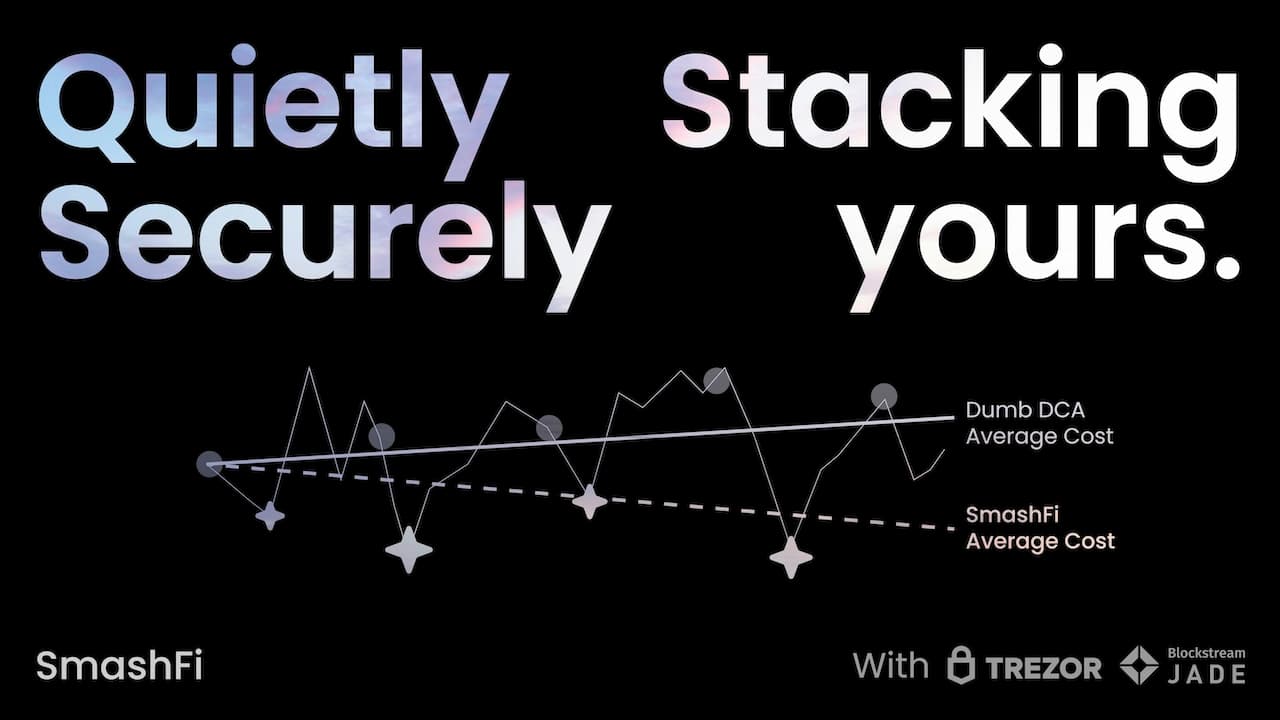
For the past decade, the golden rule of Bitcoin accumulation for retail investors was simple and unquestioned: "Just Dollar Cost Average (DCA)." The instruction was to buy the same fiat amount, on the same day every week or month, completely regardless of the price.
It was easy, passive, and psychologically comforting because it removed the stress of timing the market. However, in 2026, the rules of the game have fundamentally changed. We have entered a mature, institutionalized regime of weaponized volatility. In this highly optimized market, blind DCA is no longer a safe haven—it is a statistical liability that systematically leaks alpha to institutional algorithms.
At SmashFi, we spent the last year analyzing tens of thousands of execution points to answer a critical question: Can we mathematically prove that capturing volatility outperforms blind DCA, and more importantly, can we engineer a system to automate it?
The Statistical Flaw of Blind Execution
Traditional DCA operates with a fatal blind spot: it assumes that market volatility is perfectly random and evenly distributed. Industry data proves that this assumption is completely false.
When zooming out to monthly timeframes, the inefficiencies of blind DCA become glaring. Our data shows that executing a monthly DCA on the last three days of the month (the 28th, 29th, and 30th) statistically increases your chances of buying the monthly high by up to 6.83%.
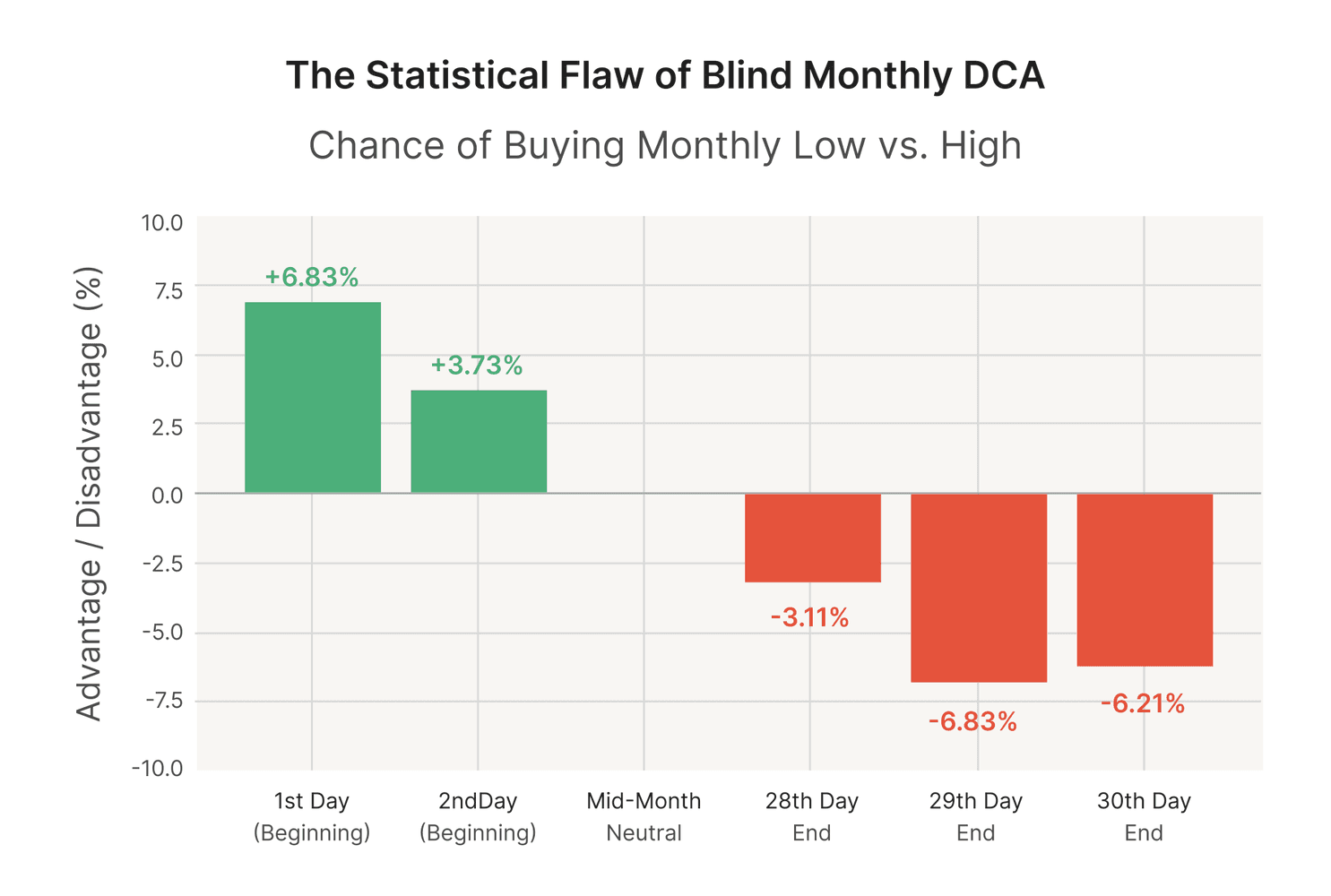
Static DCA forces you to close your eyes and walk through a dynamic battlefield. It treats a 20% market crash and a 20% euphoria pump exactly the same, forcing you to buy the absolute peak of a rally simply because it’s DCA day.
The 3.57% Edge and the Human Bottleneck
To determine the exact opportunity cost of blind DCA, our research team compared periodic buying against a strictly data-driven Buy the Dip strategy. The results were definitive: on average, the opportunistic low-price buy approach resulted in a 3.57% cheaper average purchase price.
Securing your stack at a 3.57% discount means you are permanently acquiring 3.57% more Satoshis for the exact same fiat investment. However, recognizing this mathematical edge exposes a critical flaw: Humans are practically incapable of executing it manually.
When you attempt to manually "buy the dip," you are fighting against three insurmountable bottlenecks:
- The Sleep Dilemma: A 24/7 market does not respect your 16-hour waking schedule. The most severe market flushes (like the recurring Trump Weekend Flush) frequently occur during the dead of night when global liquidity is thinnest. While you sleep, algorithms accumulate at a discount, and the market V-shape recovers before your morning coffee.
- Emotional Paralysis: When the market drops 15%, human psychology paralyzes you with fear. Instead of executing the trade, retail investors hesitate in the falling knife zone waiting for a perfect absolute bottom—only to miss the rebound entirely.
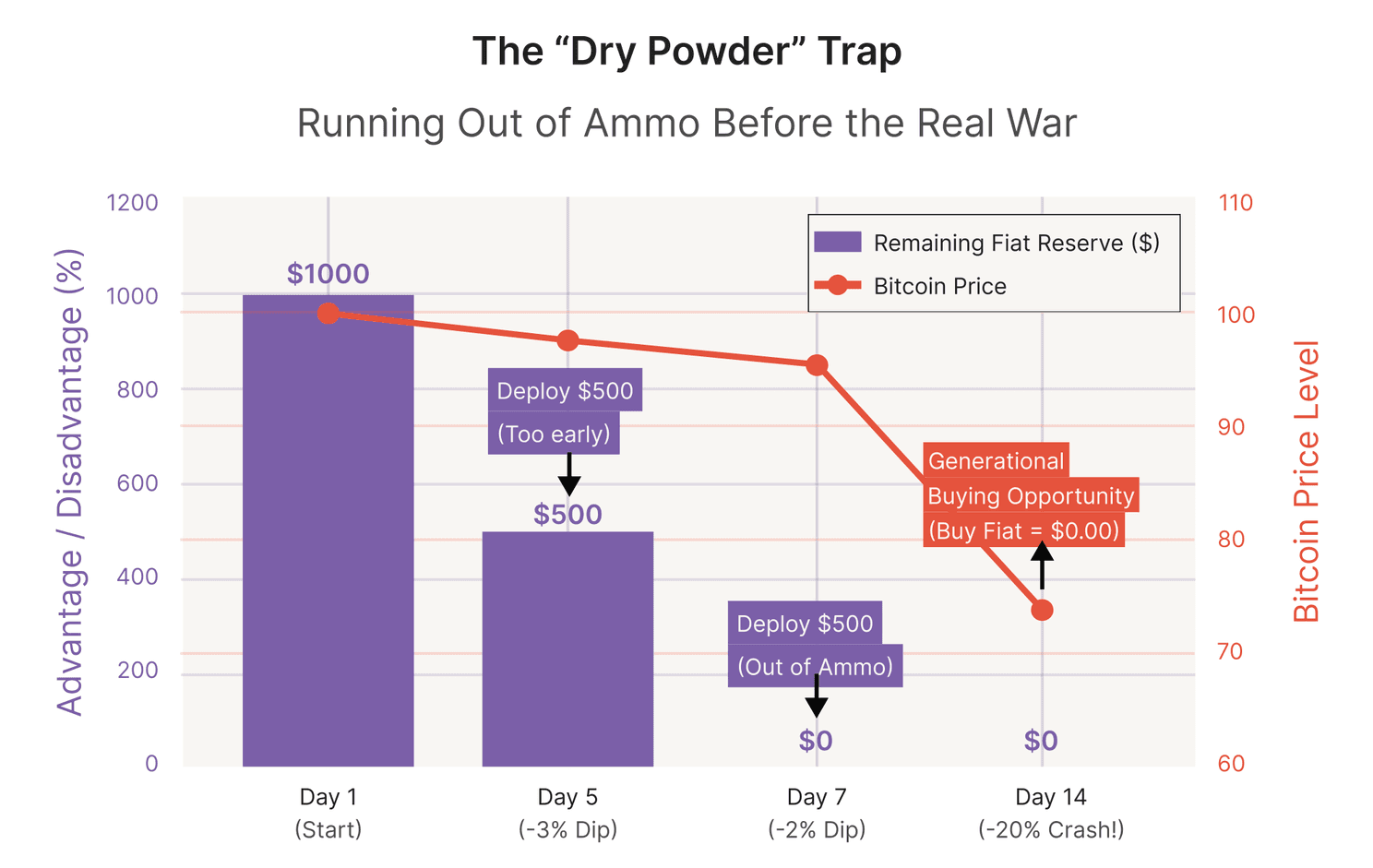
- The Dry Powder Trap: This is the ultimate failure point of manual execution. Eager dip-buyers often deploy all their fiat reserves on a shallow 3% drop. When the true 20% generational capitulation candle arrives a week later, their fiat balance is exactly $0.00. They run out of ammo before the real war begins.
The Macro Layer: Integrating the MVRV Quantile Model
To bridge the gap between theoretical perfection and human limitations, SmashFi built Dynamic Auto-Buy—an intelligent, dynamic DCA engine equipped with a Volatility Sniper. It automatically acts as a liquidity provider, pacing your budget to buy heavier when the market drops.
But micro-execution is only half the battle. To dictate the overarching aggressiveness of our engine, we rely on the MVRV Quantile Model.
Relying on a single indicator or a fixed historical price level to go all in is fundamentally flawed. Instead, this quantile model accounts for the consistent contraction in Bitcoins peaks and troughs, splitting valuations into 20 adaptive bands that mature alongside the market.
Our Rules-Based Macro Strategy:
- Top 30% (Overvalued): Stop buying entirely. Build a cash reserve. Roughly a third of all price action happens here, and it is not where you want to be deploying capital.
- Middle 55% (Fair Value): Maintain standard, steady dynamic DCA.
- Bottom 15% (Undervalued): Aggressive deployment. The engine scales up buy sizes utilizing the built-up fiat reserves.
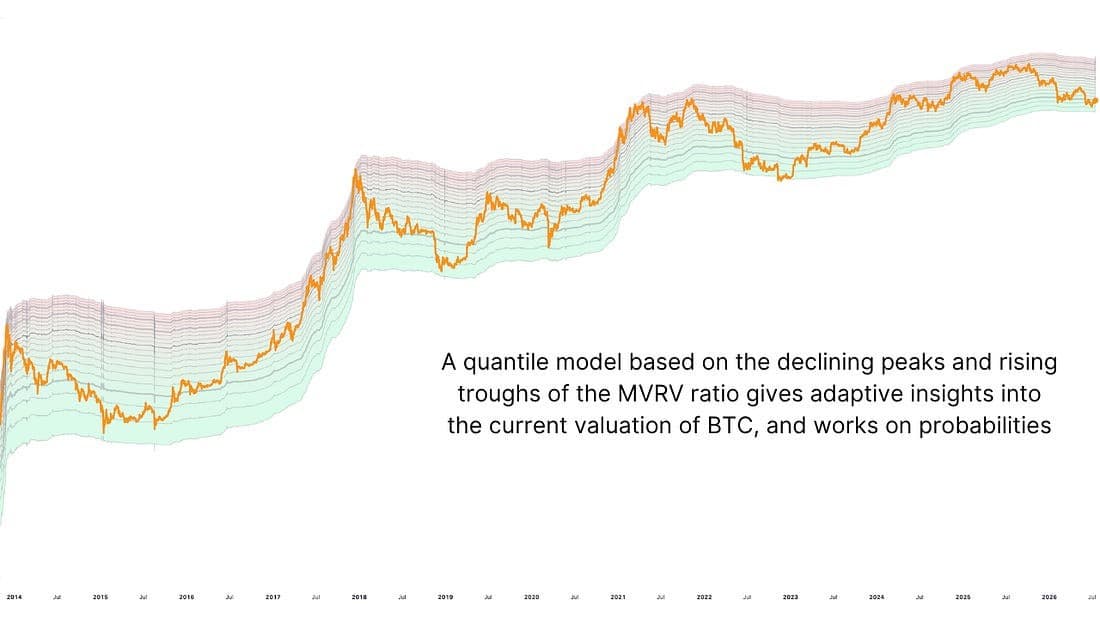
When combining this buy-side discipline with a gradual sell mode scaling out at the top 15% of valuations, the full strategy generated an astonishing 5.71x outperformance versus blind DCA since 2014. Pick any random start date in Bitcoin’s history, and this approach beat blind DCA 88% of the time, all while maintaining significantly smaller drawdowns because cash is held during the worst bleeding periods.
Democratizing the Quant Desk
Our core mission at SmashFi is to bridge the wealth gap using technology. The data proves we are succeeding: today, 99.8% of retail users on our platform utilize our automated algorithms to execute their accumulation, rapidly closing the sophistication gap with high-net-worth whale accounts (71.9% usage).
Wealth in the Bitcoin era is not built by perfectly predicting a single generational bottom. It is built by hitting singles every single day, driven by code rather than emotion. Stop donating your alpha to institutional algorithms. Don’t try to catch a falling knife with your bare hands.
Let the machine handle the steel. Start your intelligent accumulation journey with SmashFi.
Read the full SmashFi Alpha Report 2026 or learn more at smashfi.me.